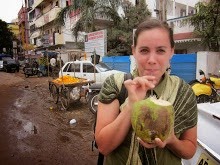


If you are a westerner and you come to India under the impression that you are going to serve some form of usefulness, you are bound to be disappointed. It’s not to say that usefulness cannot be attained. Quite the contrary. It’s just that useful has to be redefined, and patiently adhered to.
It struck me to today how much time one spends waiting in India. At least the West would call it waiting. They might call it a frightful list of other names too. They might start by calling it a waste. The question remains, is it a waste to spend an hour waiting because your team for the day hasn’t shown up? Or is it a waste to travel for 2 ½ hours via the bus system when you could reach your destination is less than half the time if you were capable of driving your own vehicle?
If you are a Westerner and your mind is filled with worries of what you won’t accomplish now when you go out, or lists of things you might have been doing with the time instead, then yes, I would say it’s a disturbing loss. But if you are an Indian, or a foreigner trying very hard to become an Indian, then time is never necessarily wasted. It’s time to be, to rest, to notice that you are alive, to be grateful for any number things. Time to observe the teaming mass of life at the bus stop, to notice people, to wonder about their stories, marvel that you are there sitting among them. This morning, I found time to sit barefoot on a bench swinging my feet in the breeze, to read and memorize, to talk to someone you might say wasn’t there, but he was. My team eventually came. We changed our plans, did something different. But we did something. Eventually that always happens around here. But if you are obsessed with missing the plan, then you miss out on the life given by the adventure. Just a thought, anyways.
G.K. Chesterton once said, “An adventure is an inconvenience rightly considered. An inconvenience is an adventure wrongly considered.” I’ve often wondered in the past two months if this wise man had ever spent any time in India.
Thursday, September 30, 2010


Wednesday, September 29, 2010
Stillness
Be still and know that I am God…
Sometimes the wind blows so hard that you have to be still because you can’t manage to do anything else.
Other times the wind moves so subtly you can’t sense it unless you are absolutely still and searching for its presence.
But always, it is there.
Sometimes the wind blows so hard that you have to be still because you can’t manage to do anything else.
Other times the wind moves so subtly you can’t sense it unless you are absolutely still and searching for its presence.
But always, it is there.
Tuesday, September 28, 2010
Brokenness
Brokenness may wear many masks.
Designer clothes. Stilettos. Carefully applied eye shadow. One hundred thousand dollar car. Hiring a divorce lawyer for the third time. Plush couches. White picket fence. Unexpected pregnancy. Sleeping pills.
Or.
Hovels made from bricks, mud, palm leaves, and tarps; too small to stand up straight. Girls only fourteen becoming brides, mothers. Alcohol. Beatings. Hungry bellies. Black veils. Angry shouting. Neighboring villages that will not speak to each other; one is Hindu, the other Muslim.
But regardless of income, skin color, nationality—brokenness and wounding are the same. The disparaging words of a neighbor still hurt. Alcoholism destroys lives. People are insecure, fearful, aching. Hearts need to be healed, to forgive. Whether I’m talking to a woman on the dirt floor of a slum or thinking back to conversations with those in the lap of suburban luxury, I’m finding that every human heart cries for the same thing, whether they realize what they are crying for or not, and none of us will be satisfied until we find it.
Designer clothes. Stilettos. Carefully applied eye shadow. One hundred thousand dollar car. Hiring a divorce lawyer for the third time. Plush couches. White picket fence. Unexpected pregnancy. Sleeping pills.
Or.
Hovels made from bricks, mud, palm leaves, and tarps; too small to stand up straight. Girls only fourteen becoming brides, mothers. Alcohol. Beatings. Hungry bellies. Black veils. Angry shouting. Neighboring villages that will not speak to each other; one is Hindu, the other Muslim.
But regardless of income, skin color, nationality—brokenness and wounding are the same. The disparaging words of a neighbor still hurt. Alcoholism destroys lives. People are insecure, fearful, aching. Hearts need to be healed, to forgive. Whether I’m talking to a woman on the dirt floor of a slum or thinking back to conversations with those in the lap of suburban luxury, I’m finding that every human heart cries for the same thing, whether they realize what they are crying for or not, and none of us will be satisfied until we find it.
Thursday, September 23, 2010
The Wind
India is hot. And there is no air conditioning—although I’ve almost forgotten that’s abnormal. The result is that doors and windows are left wide open. In bedrooms, the auditorium, dining hall, vehicles. Buses have no doors, only entrances and exits that never close. The small auto taxis are completely open—only a windshield and canvas roof, sometimes a back.
So we leave our homes, our lives open, and we wait. Anytime the breeze comes we can feel it. We breathe in the air, welcome it, let it kiss us in it’s passing. When we move down the highway it pours over our faces, reverberates in our ears. The wind sustains us through the heat. Brings relief.
I’ve always been able to feel God in the wind. They are both invisible aside from the evidence of their passing, both come with utter gentility and hurricane force.

So when I am hot, tired, lonely, I stand on the roof or at the window and I wait. The wind comes—whispering, moving, gusting. It is a voice reassuring my heart, “I am here. I have not left you.” I let it tickle my skin, play with my hair, watch it move in the palm trees, stand in awe as it makes me feel small.
Like the Indians, I leave my window open, so the wind is free to enter any time it pleases. I don’t want to miss anything it might have to say.
So we leave our homes, our lives open, and we wait. Anytime the breeze comes we can feel it. We breathe in the air, welcome it, let it kiss us in it’s passing. When we move down the highway it pours over our faces, reverberates in our ears. The wind sustains us through the heat. Brings relief.
I’ve always been able to feel God in the wind. They are both invisible aside from the evidence of their passing, both come with utter gentility and hurricane force.

So when I am hot, tired, lonely, I stand on the roof or at the window and I wait. The wind comes—whispering, moving, gusting. It is a voice reassuring my heart, “I am here. I have not left you.” I let it tickle my skin, play with my hair, watch it move in the palm trees, stand in awe as it makes me feel small.
Like the Indians, I leave my window open, so the wind is free to enter any time it pleases. I don’t want to miss anything it might have to say.
Wednesday
A holiday. No school.
The children come.
A borrowed mat spread over the dirt. A place prepared.

Singing.
Pictures colored for a story.


A craft.

Bananas.

Women filter into the edges to listen.

In the afternoon, a burning fever.
It breaks within a few hours.
I rise, shower away the sweat, and walk to have tea in an Indian home.
At the end of the day, there has been goodness in every moment.
The children come.
A borrowed mat spread over the dirt. A place prepared.

Singing.
Pictures colored for a story.


A craft.

Bananas.

Women filter into the edges to listen.

In the afternoon, a burning fever.
It breaks within a few hours.
I rise, shower away the sweat, and walk to have tea in an Indian home.
At the end of the day, there has been goodness in every moment.
Monday, September 20, 2010
Rising in the morning, thank you, Abba. Breathing. An opportunity to serve. Thank you. Clean laundry hanging dry on the roof. Faces that smile in recognition. Morning prayers. Jesus, thank you. Gravel crunching beneath my feet. The vehicle arrives. Singing. Two women come to sit with us in the slums. God, fill my heart with gratitude.
An aging woman who’s son beats her and his wife. Hands that reach to touch her. Saris lifted over the head as words murmur from our lips towards heaven. Thank you. To the one who saves, the one who’s heart cries out in anguish. We can do nothing to change a life. You can do everything. Thank you.
Sewing machines that work without electricity. New tailoring students. Heat. Dripping sweat. Rice and curry. Children that come to school, have a chance at a future better than their parents. A headache that won’t go away. A room with a fan to rest. My heart overflows with a grateful theme.
Eyes that want to go to sleep. Paper, pens, drawing picture cards. A chance to tell children stories. A banana. A campus crowded with visitors. Watching a painted sunset from the rooftop. The touch of a friend. I will address my praises to the King.
In season and out of season, for things small and great, for the beautiful and ugly, and especially all things difficult, I will say thank you. I must say thank you. I have the privilege of saying thank you. For the anchoring goodness of God.
An aging woman who’s son beats her and his wife. Hands that reach to touch her. Saris lifted over the head as words murmur from our lips towards heaven. Thank you. To the one who saves, the one who’s heart cries out in anguish. We can do nothing to change a life. You can do everything. Thank you.
Sewing machines that work without electricity. New tailoring students. Heat. Dripping sweat. Rice and curry. Children that come to school, have a chance at a future better than their parents. A headache that won’t go away. A room with a fan to rest. My heart overflows with a grateful theme.
Eyes that want to go to sleep. Paper, pens, drawing picture cards. A chance to tell children stories. A banana. A campus crowded with visitors. Watching a painted sunset from the rooftop. The touch of a friend. I will address my praises to the King.
In season and out of season, for things small and great, for the beautiful and ugly, and especially all things difficult, I will say thank you. I must say thank you. I have the privilege of saying thank you. For the anchoring goodness of God.
Friday, September 17, 2010
Writing 5's
I tutor six to ten children after school every day. For a number of reasons most of the children were not able to come today, only Ajay—a restless four-year-old from the first class who cannot understand English. “Very naughty, that one,” the Indian women will say.
So there Ajay and I sat, at a small, chalk-covered desk, I trying to get him to copy his figures and he trying to avoid or prolong the process by whatever means necessary. He didn’t have a pencil and I only had a mechanical one. He kept pressing too hard. The lead kept breaking. He was impatient, restless. I was trying to make him understand how he was writing the number five wrong. For a language I had my hands, two words I know in Telagu, and four words he knows in English.
After he finished, I planned on taking him to the canteen and buying him a small treat, but I had no way to communicate this to him, to use it as motivation. Come on, Ajay, I inwardly groaned. Just two more rows of numbers. He had no idea what was in my heart. He only saw the figures in front of him and felt the desire to avoid anything hard.

How often am I like Ajay, whining and fussing under a simple task, stubbornly putting my head in my lap to avoid having to pick up the pencil again? Yet God is waiting to unleash the blessings of heaven if only I will finish writing out three more 5’s.
Our language with the divine is limited. There is no way for him to make us comprehend the blessings of pressing through when life is hard. We just have to trust him, to finish the tasks we don’t enjoy because we need to. Because we are still in school. Because writing 5’s is what we’ve been given to do.
So there Ajay and I sat, at a small, chalk-covered desk, I trying to get him to copy his figures and he trying to avoid or prolong the process by whatever means necessary. He didn’t have a pencil and I only had a mechanical one. He kept pressing too hard. The lead kept breaking. He was impatient, restless. I was trying to make him understand how he was writing the number five wrong. For a language I had my hands, two words I know in Telagu, and four words he knows in English.
After he finished, I planned on taking him to the canteen and buying him a small treat, but I had no way to communicate this to him, to use it as motivation. Come on, Ajay, I inwardly groaned. Just two more rows of numbers. He had no idea what was in my heart. He only saw the figures in front of him and felt the desire to avoid anything hard.

How often am I like Ajay, whining and fussing under a simple task, stubbornly putting my head in my lap to avoid having to pick up the pencil again? Yet God is waiting to unleash the blessings of heaven if only I will finish writing out three more 5’s.
Our language with the divine is limited. There is no way for him to make us comprehend the blessings of pressing through when life is hard. We just have to trust him, to finish the tasks we don’t enjoy because we need to. Because we are still in school. Because writing 5’s is what we’ve been given to do.
Subscribe to:
Posts (Atom)